
 +1 555 346 27 41


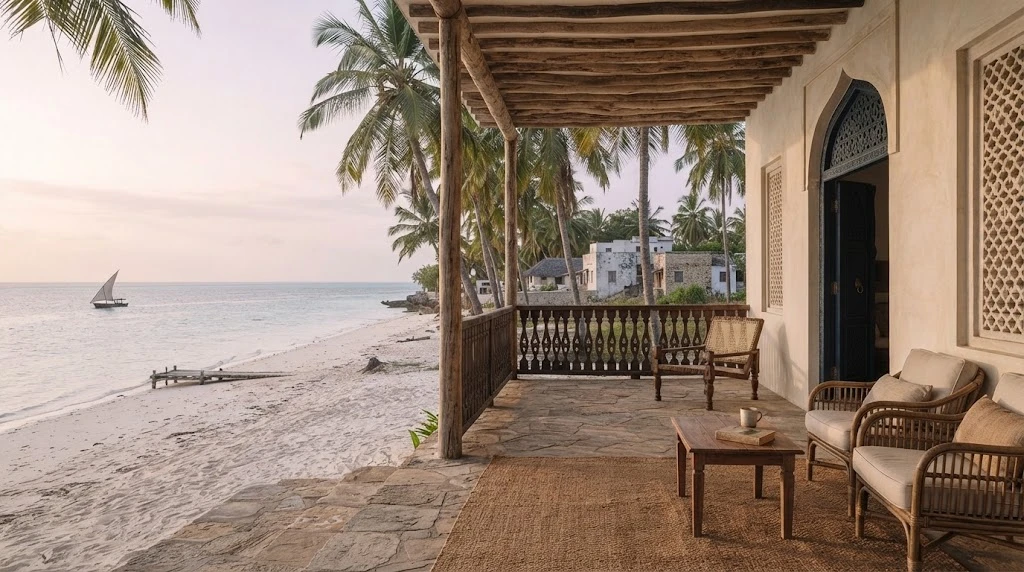
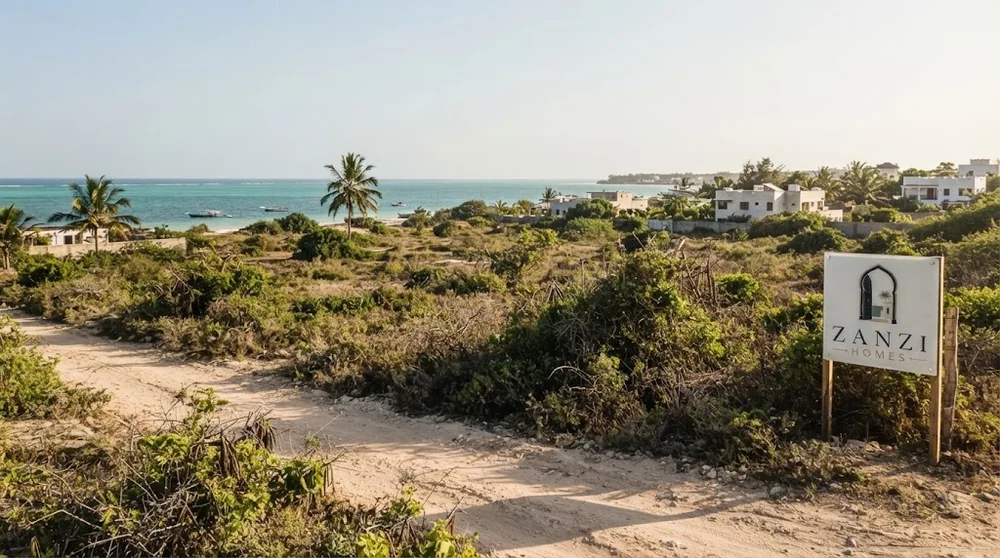
Paje, on the south-east coast of Unguja, draws many retirees with its wide white beach, turquoise tidal lagoon and easy-going village life. The same coastline that looks perfect in a holiday photograph also has tides that empty the lagoon, seasons of strong wind, patchy infrastructure and a long drive to the main hospitals. This guide from Zara and the Zanzi Homes team sets out what daily life looks like, how foreigners can hold property rights, how residence works and what a realistic budget includes. Buying land is one option among several, and a rewarding retirement in Paje does not depend on it.
Retiring in Paje, Zanzibar, can offer beach walks, a lively international community and a slower daily rhythm, but tides, healthcare access and seasonal noise shape the experience. Foreign buyers should check the exact leasehold rights, approvals and residence requirements before committing. Renting first can help establish whether Paje suits their needs year-round.
What Is Retiring in Paje Zanzibar Like?
A typical day in Paje starts early, because the coolest and calmest hours come soon after sunrise. Many residents walk the beach before breakfast, when the sand is firm and the light is soft, then buy fruit, bread and fish from small local shops and roadside stalls. Larger supermarket runs, banking errands and specialist purchases usually mean a trip towards Zanzibar City, so most long-term residents batch these tasks into one weekly or fortnightly journey.
Living in Paje Zanzibar means sharing a village with Zanzibari families, seasonal workers, small business owners and an international community that includes kite-surfers, remote workers and a growing number of retirees. Social life tends to form around beach cafés, yoga classes, Swahili lessons, volunteering and informal dinners. From our experience on the island, retirees who settle well usually build a routine beyond the beach, such as a language class, a regular walking group or a community project.
Staying in touch with family is generally workable through mobile data and home fibre or wireless connections where available, but speed and reliability vary by street and by provider. Power cuts happen, so a home office or a medical device that needs electricity calls for a backup plan.
The trade-offs are real. Midday heat and humidity can be tiring, particularly in the months before the long rains. Wind seasons bring kite-surfers and energy to the beach, along with blowing sand and louder evenings near bars. A move to Paje will not transform every retiree’s life; it suits people who enjoy simplicity, can tolerate imperfect services and are comfortable living some distance from specialist healthcare. Our team’s view is that the best decisions start with an honest list of personal needs rather than with a property brochure.
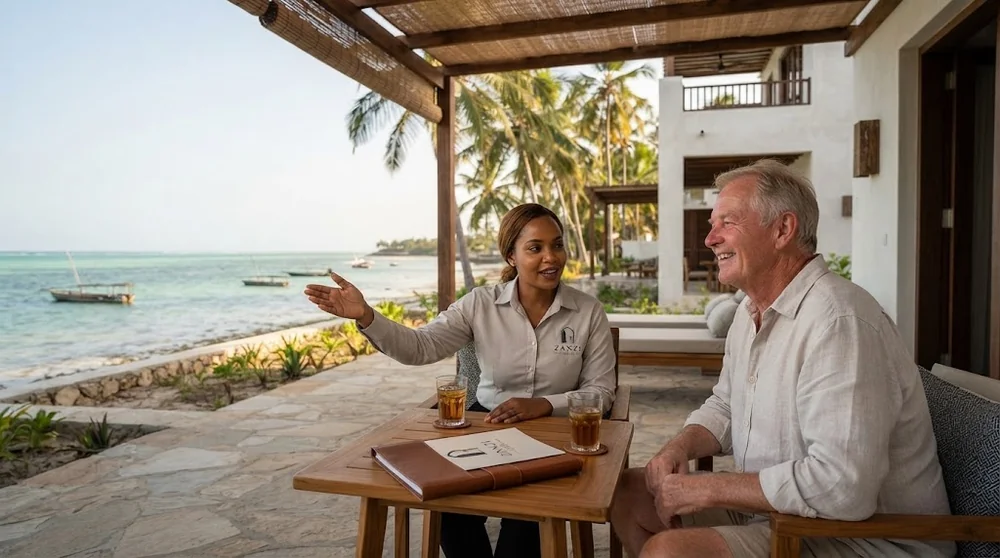
Paje Beachfront Living: Tides, Seasons and Community
Paje sits on a tidal lagoon, a shallow body of water protected by an offshore reef, where the tide controls almost everything about the beach. The following points are general observations that every prospective resident should test in person:
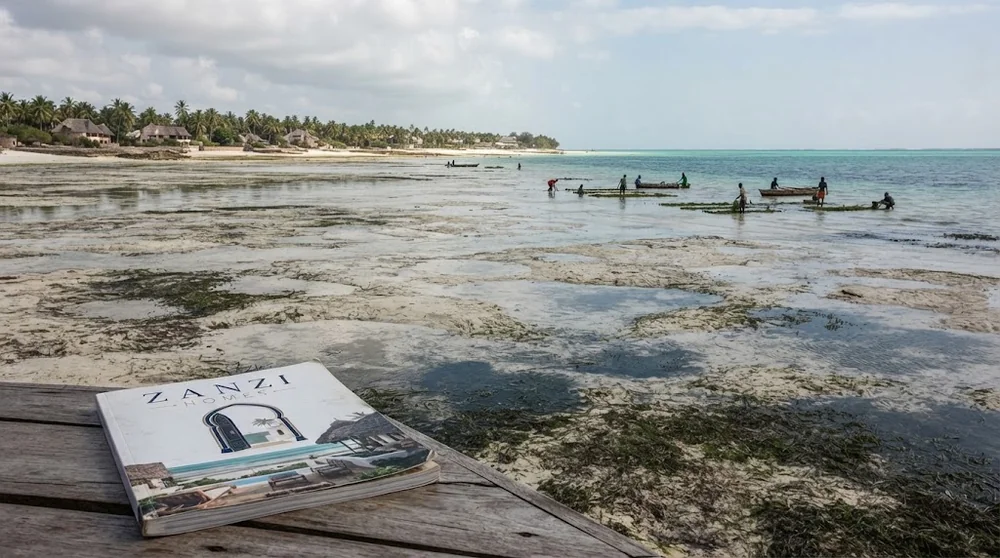
- Low tide changes the shoreline dramatically. At low tide the water can retreat a long way, exposing sand flats, seagrass and rock pools. A conventional swim may then require a long walk, or may not be practical near your house at all.
- High tide usually brings the swimming window. Around high tide the lagoon fills, and on calm days it can be pleasant for swimming. Wind, currents, seagrass, sea urchins and the exact stretch of beach all change conditions, and the hours shift each day. Check a local tide table and ask locally about safe entry points before planning a daily swimming routine or choosing a home for that purpose.
- Spring and neap tides differ. Around new and full moons, the range between high and low water is larger, so the lagoon empties further and fills deeper.
- Wind seasons shape beach life. As a general pattern, the kaskazi winds from roughly December to March and the kusi winds from roughly June to September bring strong, steady breezes. These seasons attract kite-surfers and keep busier stretches of beach lively.
- Noise is local, not uniform. Stretches near beach bars, kite schools and party venues can be loud into the night, while plots a short distance away may be quiet. Visit after dark before deciding.
- Rain and humidity vary through the year. The long rains typically fall around March to May, with shorter rains later in the year; roads can become muddy and some businesses close in the low season.
- The lagoon is also a workplace. Many local women farm seaweed on the tidal flats, and fishers launch boats from the beach. Respect the farm lines, avoid walking or kiting through them, and ask before photographing anyone at work.
- Community ties take time. Learning basic Swahili greetings, dressing modestly away from the beach, respecting prayer times and Ramadan, and buying from local businesses help build genuine relationships.
Paje beachfront living works best for people who see the village as a community to join rather than a backdrop. In our team’s opinion, a retiree who adapts their day to the tide quickly comes to enjoy the rhythm.
Can Foreigners Hold Land or a Villa in Zanzibar?
Can foreigners buy land in Zanzibar? The short answer is that nobody, local or foreign, buys land outright in the freehold sense. Under the Zanzibar Land Tenure Act 1992, all land in Zanzibar is public land vested in the President (as of October 2026), and private parties hold rights over it, such as rights of occupancy or leases. A leasehold is a right to use land for a fixed number of years under the terms of a lease, after which the right ends unless it is renewed according to law and contract. The Act also restricts dealings in land rights, including the sale of rights in agricultural land (as of October 2026).
For foreign individuals, access to land rights is generally linked to approved investment. The Zanzibar Investment Promotion Authority (ZIPA) evaluates and approves investments, and the Zanzibar Land Commission administers government leases, while transfers of land rights go through the Land Transfer Board (as of October 2026). Which bodies are involved depends on the property, the buyer and the type of interest, so no single procedure applies to every transaction.
| Route | What you acquire | Who is typically involved | Key questions to verify |
|---|---|---|---|
| Renting a house or villa | A tenancy for an agreed period; no ownership interest | Landlord or managing agent; written tenancy agreement | Landlord’s authority to let, deposit terms, repairs, utilities and notice period |
| Interest in a completed villa in an approved project | A unit or villa interest defined by the project’s legal structure and your contract | Developer, ZIPA (for approved real estate projects), lawyer, relevant land authorities | Project approval status, the head lease and its remaining term, what exactly you receive, service charges and resale rules |
| Rights over a plot for your own development | Land rights for construction, usually through an investment structure and lease | ZIPA, Zanzibar Land Commission, Land Transfer Board, planning and environmental authorities, lawyer | Whether the route is open to you at all, permitted use, lease length, building permits and environmental conditions |
Lease terms are a frequent source of confusion. The Zanzibar Investment Act 2023 describes a 33-year land lease as an incentive for developers of approved real estate projects (as of October 2026). ZIPA’s general investment guide describes a 33-year lease that may be renewed in two further terms, up to 99 years in total, as a general investment incentive (as of October 2026). Both statements concern the investor or developer who holds the head lease. They do not establish the term an individual buyer receives, and no buyer should assume an automatic 99-year lease or an automatic renewal. Your term is the one written in your contract and in the underlying lease, and it can never be longer than what the developer itself holds.
Because these provisions sit in the Act’s schedules and may be affected by implementing regulations issued since, we always recommend asking a Zanzibar-qualified lawyer to cite the exact provisions and current regulations that apply to your project in writing, rather than relying on a marketing summary.
A mistake we see foreign buyers make: assuming the rules of one approved project apply to every villa or plot on the island. In practice, the process looks like this: identify the exact interest on offer, trace it back to the registered lease, confirm the approvals behind it and only then negotiate. You can read ZIPA’s own investment information and incentive guides on the Zanzibar Investment Promotion Authority website.
Residence Permits for Retirees in Zanzibar
Three separate questions apply to every foreign retiree: whether you hold property rights, whether you have permission to live in Tanzania and whether you have permission to work. Owning or leasing a villa does not by itself give a foreigner the right to reside or to work in Zanzibar. Each permission has its own legal basis and its own application.
Immigration is a Union matter, so the Tanzania Immigration Services Department handles residence permits for both the mainland and Zanzibar. Tanzania Immigration lists retired persons within residence permit Class C, the class for foreigners who are neither investors nor employees (as of October 2026). The published Class C residence matrix describes the retired persons subcategory (C-2) as covering people aged 55 and above with an assured income to sustain themselves and their dependants (as of October 2026). For C-2, the matrix lists a standard fee of USD 500, a fee of USD 250 for citizens of East African Community states and a fee of USD 250 under the diaspora category (as of October 2026). Being from outside the EAC does not on its own settle which fee applies, so confirm your category and ask whether any additional charges apply. The department’s specific requirements for retirees include evidence of retirement benefits, a letter of retirement and evidence of a place of occupancy (as of October 2026).
The same matrix also lists a separate Class C subcategory, C-11, for certain buyers of real estate (as of October 2026). Whether you qualify, how it relates to the retiree route and which fee applies are questions for Immigration and your adviser; buying a property does not automatically grant a permit under either subcategory. Requirements, fees and validity periods change, so confirm the current position through the Tanzania Immigration Services Department before applying.
Property buyers have a further possibility on the investment side. Under the Zanzibar Investment Act 2023, a buyer who acquires residential property within a ZIPA-approved real estate investment at a value of at least USD 100,000 may be eligible for residence-related incentives, subject to the applicable conditions (as of October 2026). The incentive is not an automatic permit, and it should not be assumed to apply to a bare plot or to property outside an approved project. Your lawyer should identify the exact provision and any implementing regulations, and Immigration still decides the permit itself.
Permission to work is a different matter again. A retirement-based residence permit does not authorise employment, and a retiree who later wants to run a business or rent out property commercially should take advice on the work, business and tax rules that apply. We always recommend speaking to a qualified immigration adviser in addition to your property lawyer.
The Real Cost of a Paje Beachfront Villa
The cost of living in Paje Zanzibar depends on whether you rent or own, how you live and how much you import. A tenant’s monthly budget is not an owner’s budget, because ownership adds acquisition costs, maintenance and the expense of looking after a house when you are away. We could not verify current numerical figures that would hold across plots, contracts and seasons as of October 2026, so we do not give a numerical estimate here. Unverified numbers would mislead. Instead, the template below separates the three scenarios so you can request written quotations for each line and add up only what applies to you.
| Cost line | Timing | Renting | Completed villa interest | Plot plus own build | What to include |
|---|---|---|---|---|---|
| Villa purchase price or lease premium | One-off | No | Yes | No | The price of the villa interest in the project, as stated in the contract |
| Plot rights premium | One-off | No | No | Yes | The price or premium for the land rights only |
| Design, permits, construction and supervision | One-off | No | Usually inside the villa price; confirm | Yes | Architect, building permits, building contract, site supervision, connections |
| Legal fees, due diligence, registration, approvals and taxes | One-off | Small (tenancy review) | Yes | Yes | Lawyer, searches, survey, transfer approvals and any taxes; varies by route |
| Rent | Monthly | Yes | No | No | Agreed rent, deposit and any agency fee |
| Ground rent and service charges | Annual | No | Yes | Ground rent, if any | Amounts payable under the lease and project rules |
| Electricity and backup power | Monthly | Yes (grid; backup often landlord) | Yes | Yes | Grid supply, generator or solar with batteries, fuel and servicing |
| Water | Monthly | Yes | Yes | Yes | Mains where available, borehole, tanks, filtration, delivered water |
| Cleaning, garden and pool | Monthly | Often | Yes | Yes | Staff wages and statutory obligations, supplies, pool chemicals |
| Salt-air maintenance | Annual | Usually landlord | Yes (part may sit in service charge) | Yes | Repainting, rust treatment, fittings, roof and appliance wear |
| Property insurance | Annual | Contents only | Yes | Yes | Buildings and contents cover, availability of storm cover |
| Security and absence care | Monthly | Optional | Yes | Yes | Guard or caretaker, checks during trips abroad, alarm systems |
| Health insurance and evacuation cover | Annual | Yes | Yes | Yes | International health cover, evacuation cover, medicines, check-ups |
| Transport, food and daily living | Monthly | Yes | Yes | Yes | Car or driver, fuel, local and imported food, eating out, connectivity |
| Residence permit and renewals | Per application | Yes | Yes | Yes | Government fees for your category and adviser costs; confirm current rates |
| Contingency reserve | Annual | Smaller | Yes | Yes | Storm damage, major repairs, price rises and currency movements |
Two rules keep the sum honest. First, the acquisition rows are mutually exclusive: a completed-villa buyer counts the villa price, while a self-builder counts the plot premium plus construction, never both. Second, add the timings correctly: first-year cost equals one-off costs plus twelve months of monthly costs plus annual costs; each following year equals twelve months of monthly costs plus annual costs.
A beachfront owner should budget separately for living costs, property costs and a contingency reserve, because seaside homes wear faster than inland ones. As a clearly labelled hypothetical scenario: a couple who rent for six months and track every expense will end that period with a far more reliable living budget than any online estimate, and can then add owner-only lines on top using written quotations.
Our team’s opinion: the cost that surprises owners most is rarely the purchase. It is the steady work of keeping a house in good shape beside the ocean, especially during long absences.
Healthcare and Accessibility for Retirement
Healthcare in Zanzibar for retirees is the area where we urge the most careful planning. Hospital services in Zanzibar City have been reorganised in recent years, and which facility currently provides which emergency or specialist service can change. Confirm this directly with the hospitals or the Zanzibar health authorities before you move, and again before any planned treatment. Paje is roughly an hour’s drive from Zanzibar City in normal conditions, a general observation that you should test yourself at different times of day. Use this checklist:
- Find the nearest suitable clinic. Visit it, ask which services it offers, its opening hours and how it handles emergencies at night. Do not assume any clinic provides a particular service without checking.
- Confirm hospital services directly. Ask the hospitals you would use which emergency, imaging, cardiac and specialist services they currently provide, and note the date you checked.
- Map the hospital route. Drive to those hospitals in the morning, at midday and after dark, and note how long each trip takes.
- Plan an emergency procedure. Keep emergency contacts, a trusted driver’s number and copies of medical records in one place, and agree a plan with neighbours.
- Secure your regular medication. Confirm with your doctor and a local pharmacy whether your medicines are available locally, and carry prescriptions and a reserve supply when travelling.
- Buy international health cover. Check that the policy covers residence in Tanzania, pre-existing conditions and your age band.
- Understand medical evacuation cover. A policy may cover an approved transfer to a facility elsewhere when its terms are met. Check the destinations it allows, exclusions for pre-existing conditions, financial limits, and who must authorise an evacuation and how.
- Check step-free access. Count the steps from the road to the front door and from the bedroom to the bathroom, and ask whether ramps can be added.
- Inspect the bathroom. Look for a level-entry shower, grab rails, non-slip tiles and enough space to turn with a walking aid.
- Test paths and surfaces. Loose sand, uneven coral stone and slippery polished tiles can be hazardous; firm, level paths are easier to manage as mobility changes.
- Confirm vehicle access. An ambulance or taxi should be able to reach your door in the rainy season, not only in dry weather.
A step-free home with reliable vehicle access is worth more to many retirees than an extra metre of beach frontage. We always recommend a consultation with your own doctor before a long-term move.
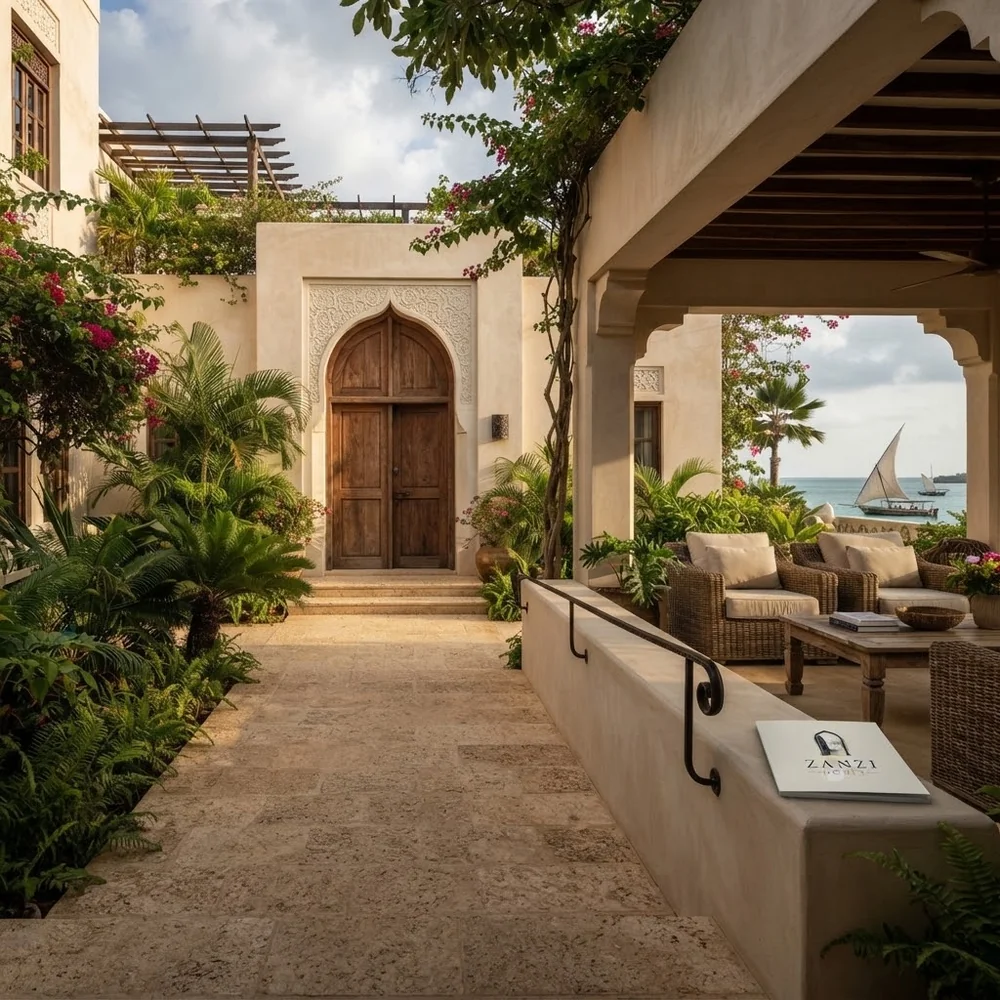
Paje, Jambiani or Bwejuu for Retirement?
Paje, Jambiani and Bwejuu sit close together on the south-east coast and share the same tidal lagoon system, but their atmospheres differ. The comparison below reflects our team’s general assessment, not verified ratings. Conditions vary by street, plot and season, and we deliberately do not assign safety scores or prices.
| Criterion | Paje | Jambiani | Bwejuu |
|---|---|---|---|
| General atmosphere | Livelier, with a strong kite-surfing scene | Long village strip with a quieter feel in many stretches | Calmer and more spread out along the coast |
| Restaurants and daily services | Wide choice by local standards | Good choice, more dispersed | Fewer options; more driving for errands |
| Potential noise | Higher near bars and kite schools in wind seasons | Lower in most areas; check near guest houses and bars | Generally low; check specific neighbours |
| Tides and beach | Shallow lagoon; long low-tide flats | Shallow lagoon with seaweed farming | Shallow lagoon; sandbanks at low tide |
| Social life for newcomers | Easiest to meet people quickly | Smaller groups, more village-centred | Quieter; social life often means driving |
| Access to clinics and transport | Central on the south-east road | Further south; check the road in the rains | Further north; check the route to Zanzibar City |
| Questions for a viewing | How loud is it at night in peak season? | How far is the walk to the water at low tide? | How long is the drive to shops and clinics? |
Every one of these generalisations has exceptions, because a quiet lane in Paje can feel calmer than a busy section of Jambiani. When you view homes in any of the three villages, ask the same service questions: where is the nearest pharmacy and is it open in the evening, which clinic handles night emergencies, how reliable is power on that street, does the access road flood in April and May, and can a taxi find the house after dark. Write the answers down so the comparison stays fair.
Choosing between the three villages comes down to personal priorities: social life, quiet, services and how far you are willing to drive for errands and medical care.
If you already know your budget, preferred village and must-have features such as step-free access, we can match them against properties that fit your criteria.
A shortlist is only a starting point, and every option still needs the legal and practical checks described in the next section before any money changes hands.
Before You Pay a Deposit: Land Checks
Before you pay a deposit, confirm the approval status. Paje beachfront villa retirement plans fail most often at this stage, when buyers commit money before they understand what they are buying. The sequence below is our recommended order of checks, but it is not a universal approval route, and the exact requirements depend on the property and your circumstances.
If you are weighing a specific plot or villa and want a practical view of its approvals, lease terms or next steps, a short one-to-one conversation can clarify what to check first.
Our team can explain the process and point out issues, but the legal opinion on your transaction should always come from your own independent lawyer. With that in mind, work through these checks in order:
- Appoint an independent, Zanzibar-qualified property lawyer. The lawyer should act only for you, not for the seller or developer, and should confirm in writing which route is legally available to you.
- Verify the rights holder. Search the land records to confirm who holds the right of occupancy or lease, its remaining term, any mortgages, disputes or restrictions, and whether the seller can legally transfer it.
- Confirm the boundaries. Compare the registered survey plan with the physical plot, check the beacons on site and make sure neighbours do not claim any part of the land.
- Identify the permissions the deal requires. Depending on the route, these may include ZIPA approval, Zanzibar Land Commission involvement and Land Transfer Board consent; ask for copies, not summaries.
- Check permitted use and coastal building limits. A coastal setback is a minimum distance from the shoreline within which construction is restricted; confirm the setback and other planning rules that apply to your exact plot with the relevant authorities.
- Confirm road access and public beach access. Make sure a legal access road reaches the plot. Beaches in Zanzibar are generally used by the public, including fishers and seaweed farmers, so do not assume a beachfront plot gives you a private beach; verify any claimed restriction with your lawyer.
- Check utilities. Ask for evidence of electricity connection or its cost, water source and quality, wastewater and septic arrangements, and mobile and internet coverage on the plot itself.
- Assess flooding, erosion and environmental duties. Look at the high-tide line, signs of erosion and drainage after heavy rain, and confirm whether an environmental assessment is required for your project.
- Understand community relations. Find out whether local residents use paths across the land, whether there are graves, trees or customary uses, and how the project will affect neighbours’ livelihoods.
- Only then agree deposit and exit terms. The contract should state when the deposit is refundable, which conditions must be met before completion, and what happens if an approval is refused.
Paying money before these essential checks are complete exposes a buyer to risks that can be slow and costly to reverse. A good property will usually survive a few extra weeks of careful checks.
Try Paje Before Making a Long-Term Move
Testing the lifestyle costs far less than correcting a rushed purchase. We suggest this sequence:
- Rent for long enough to live a normal routine. A stay of several months lets you test shops, clinics, transport, internet and your real monthly spending. Keep a simple expense log from the first week; it becomes the most reliable part of your budget.
- Visit at high and low tide. Walk the beach in front of any property you like at both extremes, around new and full moons if possible, and note where you could actually enter the water.
- Return in the evening. Listen for music, generators, traffic and dogs, and notice how well lit the access road is.
- Experience different seasons if you can. Spend time in a windy season and in the rains to see how heat, humidity, roads and noise change. During the rains, check whether your route to the main road stays passable and which restaurants and shops close.
- Run a healthcare rehearsal. Register with a local clinic, refill one prescription locally and time the drive to the hospital you would use, so you know the procedure before you need it.
- Test daily logistics. Do one full supply run to Zanzibar City, arrange a repair through a local technician and handle a power cut, and note how each one went.
- Write down your personal criteria. Rank priorities such as quiet, swimming, social life, hospital distance and step-free living.
- Compare all three options fairly. Weigh long-term renting, an interest in a completed villa and your own build against those criteria. Many retirees conclude that renting remains the best fit, which is a perfectly sound result.
Frequently Asked Questions
Can foreigners buy land in Paje, Zanzibar?
Foreign buyers should not assume that a Paje land purchase provides unrestricted ownership. Zanzibar uses a system of land rights and leases under which all land is public land, and the available route depends on the buyer, the project and the interest being acquired. Foreign individuals usually access land rights through approved investment. Before paying a deposit, ask an independent Zanzibar-qualified lawyer to examine the title, lease term, permitted use and required approvals.
Does buying a villa in Zanzibar automatically give me residency?
No. Acquiring a villa and obtaining permission to reside are separate matters. Zanzibar’s investment legislation provides for possible buyer incentives in qualifying ZIPA-approved real estate projects, and Tanzania Immigration publishes separate permit categories for retirees and certain property buyers. Eligibility depends on the applicable conditions, and a purchase alone should not be treated as a permit. Check the relevant route with Tanzania Immigration and an independent adviser before committing.
Can you swim in Paje throughout the day?
Swimming conditions in Paje’s shallow tidal lagoon change substantially with the tide. Around low tide, the water can recede far from shore, making a conventional swim difficult in some places. Around high tide swimming is often easier, though wind and currents still matter. Check a local tide table, inspect the specific beach and ask about safe access before choosing a home or planning a daily routine around swimming.
How much does it cost to retire in Paje?
There is no reliable single retirement budget for Paje, because housing, healthcare, transport, imported goods and personal habits vary widely. A beachfront owner should budget separately for one-off acquisition costs, monthly living costs, annual property costs and a contingency reserve, counting either a villa price or a plot plus construction, never both. Request current local quotations and test your own spending during a rental stay rather than relying on a generic online estimate.
Is Paje or Jambiani better for retirement?
Paje may suit retirees who value a livelier beach, more restaurants and an international kite-surfing community. Jambiani may appeal to people seeking a quieter village atmosphere with a longer stretch of coast. Conditions differ between individual streets and seasons, so visit both locations at different times of day and year, and compare healthcare access, transport, noise and the specific property before deciding.
Conclusion
Retiring in Paje Zanzibar can be deeply rewarding for people who enjoy a simple coastal rhythm, an international yet village-based community and days shaped by the tide. The limitations are equally real: specialist healthcare is a long drive away, infrastructure can be patchy, wind seasons bring noise to parts of the beach and seaside homes demand constant maintenance.
On the legal side, all land in Zanzibar is public land, foreigners hold leasehold-type rights through specific routes, and property rights, residence and permission to work are three separate questions. Lease terms and residence incentives depend on the exact project, contract and current regulations, never on general marketing statements.
From our experience on the island, renting first, checking healthcare access before beach views and taking independent legal advice before paying anything can help retirees make a better-informed decision. Buying is one possible outcome of that process, and choosing to keep renting is an equally good one.
Disclaimer: This article is general information as of October 2026 and does not constitute individual legal, financial, tax, immigration or medical advice. Laws, fees and procedures can change; consult an independent Zanzibar-qualified lawyer and other suitable specialists about your own circumstances.
 Real estate in Georgia
 Real estate in Cyprus
 Real estate in the UAE
 Bali Real Estate
 Real estate in Thailand
 Real estate in Spain
 Real estate in Saudi Arabia
 Real estate in Turkey
 +1 555 346 27 41
 hello@zanzi.homes
 Posta Kuu Mizingani Road Zanzibar City, 3310, Zanzibar, Tanzania


 Get catalogue of TOP-7 objects